bestkako Running Shoe Grip Guide
bestkako Running Shoe Grip Guide
bestkako Running Shoe Grip Guide
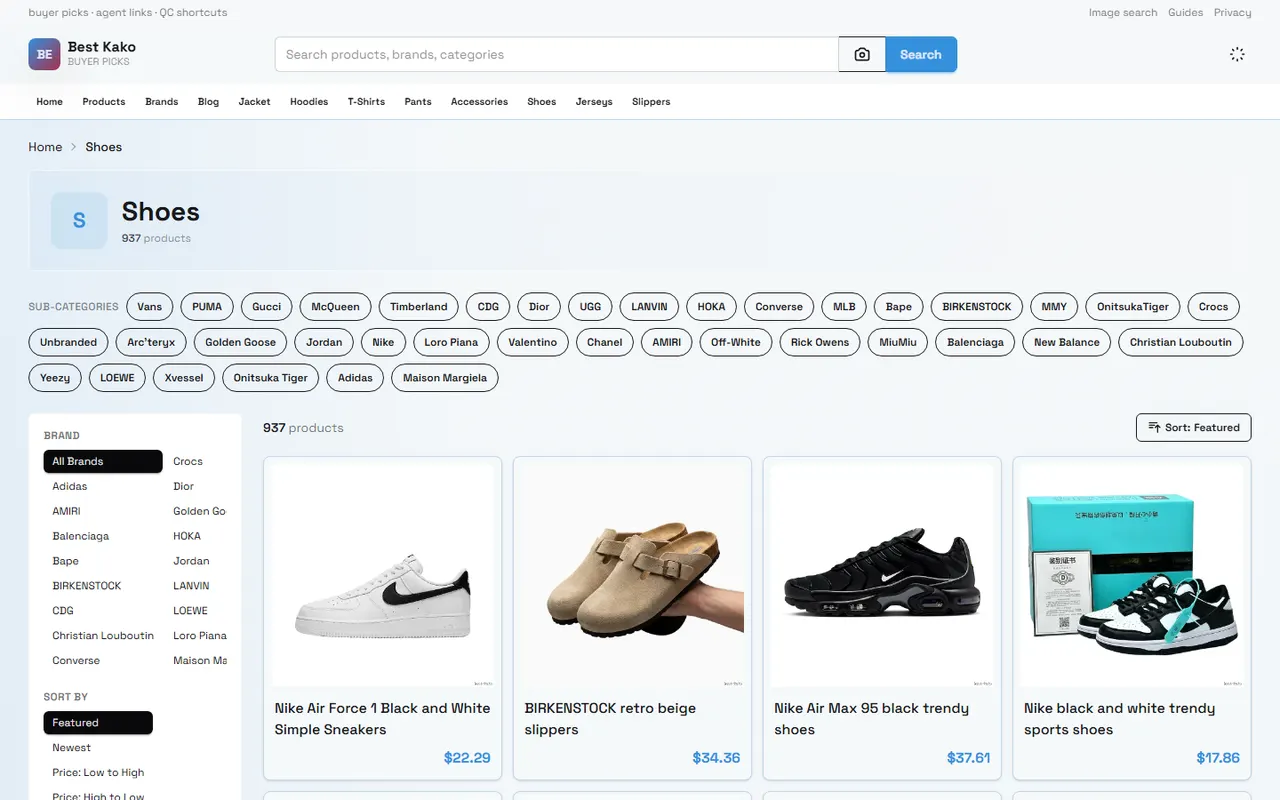
This guide solves a specific problem: you're about to browse running shoes on best-kako.com, but you're unsure how different surfaces, usage frequency, and outsole details affect grip and durability. After reading, you can establish filtering criteria based on your running environment and check the information actually visible on product pages before ordering.
This article is not meant for situations requiring evaluation by a doctor, podiatrist, or professional running coach, nor does it replace judgment for foot injuries, severe overpronation, or special orthotic needs. best-kako.com product information, sizes, stock, prices, and page link statuses may change, and the following judgments should be based on what you see on the product page on the day you view it. 📅
Clarify Running Surface and Usage Frequency
Don't start with "which shoe is most durable," but first record where you actually run.
Asphalt, sidewalks, and rubber tracks: usually need stable ground contact, an outsole layout suited for repetitive landings, and tread that doesn't drag excessively.
Park dirt paths, gravel paths, and compacted mud: need more pronounced tread edges and better mud-shedding ability.
Wet surfaces: focus on outsole rubber coverage, tread spacing, and contact continuity, not just the word "non-slip."
Mixed surfaces: if one run takes you through asphalt, brick roads, wet grass, and dirt paths, prioritize a design that balances stability and drainage rather than optimizing for a single extreme surface.
Then record weekly wear frequency, single-run distance, and whether you walk commute. Someone who runs once or twice a week usually wears shoes differently from someone who trains daily; but actual lifespan is also influenced by body weight, gait, pace, ground roughness, and cleaning methods.
What bestkako Product Information Can Prove
When viewing candidate shoes on best-kako.com, first separate product page information into "clearly displayed on the page" and "not proven by the page."
Clearly displayed content can be used for initial screening, for example:
Product name, style, or series name
Visible sole images, side images, and outsole images
Sizes, colors, materials, or style options listed on the page
Price, stock status, and variant information shown on the page
Whether the page provides instructions related to purchase, shipping, or after-sales
Content not shown on the page should not be assumed, for example:
Actual rubber compound
Friction coefficient on wet surfaces
Guaranteed running kilometers
Real abrasion resistance rating
Whether it suits all foot types or all weather
Whether it has been independently lab tested
If the page has only blurry images, lacks sole views, or key fields cannot be confirmed, mark it as "insufficient evidence" rather than treating marketing descriptions as test results. This is especially true for grip: a photo of the upper cannot prove outsole performance on slippery surfaces. 🔍
Initial Screening by Outsole Tread and Coverage
Initial outsole screening can start with four observable points.
First, look at tread direction. Longitudinal continuous tread is usually easier to observe front-to-back rolling direction, while transverse or diagonal grooves may serve turning and braking. Don't just count grooves; consider the actual distribution of the forefoot, heel, and midfoot.
Second, look at tread depth and spacing. Deeper, wider-spaced tread may accommodate mud more easily, but it may not be more comfortable or stable on smooth hard ground. Fine tread may be more continuous on dry surfaces, but when encountering mud, sand, or standing water, additional observation of mud-shedding and drainage space is needed.
Third, look at rubber coverage. If the outsole covers only high-wear areas, the shoe may be lighter, but the wear risk at edges and midfoot positions needs careful inspection. If coverage is larger, it usually provides more complete protection, but that does not guarantee a longer overall lifespan.
Fourth, look at the landing zones of the forefoot and heel. The lateral heel, medial and lateral forefoot, and toe-off areas typically experience friction in different directions. Outsole photos of candidate shoes should be clear enough to at least distinguish whether these areas have obvious structural differences.
During initial screening, you can keep a simple record for each shoe:
Whether the tread matches your primary surface
Whether grooves are likely to clog easily
Whether high-wear areas have continuous coverage
Whether there are obvious weak points at the sole edges
Whether the images are clear enough to support judgment
Dry, Wet, and Mixed Surface Verification Methods
Dry surface performance cannot directly infer wet surface performance. An outsole that looks smooth on dry asphalt may have completely different contact conditions when encountering water film, leaves, or fine sand.
If you mainly run on dry hard surfaces, prioritize checking:
Whether there is continuous contact area in the forefoot and heel
Whether the tread is too loose or prone to creating a wobbling sensation
Whether there are large gaps at the outsole edges
Whether the sole structure is consistent with stability needs
If you often encounter wet surfaces, prioritize checking:
Whether the outsole has clear grooves and contact edges
Whether grooves are likely to be quickly filled with mud and sand
Whether both forefoot and heel have visible grip structures
Whether the product page only says "non-slip" but lacks sufficient images or technical explanations
If you use shoes on mixed surfaces, it's best to put candidates into two lists: "primary surfaces" and "occasional surfaces." Primary surfaces determine the base design; occasional surfaces determine whether deeper tread, larger coverage, or better drainage space is needed. Don't choose an outsole that obviously sacrifices comfort on hard ground just to occasionally pass a short muddy section; also don't ignore consistently slippery sections just because you mostly run on asphalt. 🌧️
High-Wear Areas and Sole Seam Inspection
Durability depends not only on outsole thickness. Before ordering, also check the connection between outsole and upper, and positions subject to repeated flexing.
Focus on the following areas:
Lateral heel: if your landing habit makes this area contact the ground first, wear will be more concentrated.
Forefoot flex zone: repeated flexion may blunt tread edges and increase stress on bonded areas.
Lateral toe: frequent turning, kicking curbs, or insufficient toe room makes this area more prone to friction.
Lateral midfoot edge: mixed surfaces and lateral movements may subject edges to extra wear.
Outsole seams: check for obvious lifting edges, gaps, or discontinuous bonding lines.
Product images cannot prove the sole has passed durability tests, but they can help you identify information gaps. If seams are obscured in images, angling is insufficient, or resolution is too low, you should lower confidence rather than assume workmanship is fine.
After receiving the product, if platform rules allow inspection, complete appearance records before use, and keep order, product page, and arrival condition information. If you find separation, obvious deformation, or inconsistency with page description, follow the after-sales process published by best-kako.com at that time, rather than wearing the shoes for a long time before trying to prove original condition.
Separate Promotional Descriptions from Observable Evidence
Words like "wear-resistant," "grip," "outdoor," "all-weather" on product pages can serve as search clues, but cannot be conclusions on their own. A more reliable approach is to build a three-layer judgment:
What the page text says.
What can be observed from product images.
What current evidence cannot yet prove.
For example, if the page says "suitable for outdoor," you can record it as "brand or seller positioning." If images show the outsole has obvious multi-directional tread, you can record that as "appearance shows relevant design." But you still cannot write "definitely slip-resistant in rain" or "guaranteed long-term wear resistance."
Maintain the same distinction regarding sizing. The size chart on the page can help with initial matching, but it cannot replace checking foot length, foot width, instep height, and wearing habits. If size information differs between models, rely on the size chart for the specific product page, not your experience from another shoe.
Grip and Durability Checklist Before Ordering
Before selecting candidate products on best-kako.com, complete checks in the following order:
Record primary running surfaces and weekly usage frequency.
Confirm that the product page shows clear outsole or sole-related images.
Judge whether tread direction, spacing, and coverage suit your primary surfaces.
Separately record dry surface evidence, wet surface evidence, and unconfirmable parts.
Inspect heel, forefoot, lateral toe, and outsole seams.
Compare whether page text and images are consistent.
Check current price, size, stock, and variants, and record the viewing date.
Save product page information to avoid inability to recheck after page changes.
Be cautious of claims like "guaranteed wear-resistant" or "absolutely non-slip" that lack evidence.
If there are injuries, obvious foot shape issues, or special training needs, seek professional advice first.
A practical screening result need not be written as "this shoe is definitely the best," but can be: "This shoe's visible outsole structure better matches my primary surfaces, but wet performance and actual lifespan are still not proven by the current page." This kind of conclusion is more suitable for real purchase decisions. ✅
Finalize Candidate Selection Based on Surface Needs
Finally, group candidate shoes by use scenario, not by promotional words.
If you mainly run on dry asphalt or rubber tracks, prioritize models with continuous ground contact, clear structure, and reasonable coverage of forefoot and heel wear areas. If you often run on wet, leafy, or fine sand surfaces, prioritize excluding models with vague outsole information, shallow grooves, or only promotional text without detailed images.
If you need one shoe for mixed surfaces, the focus should be compromise: enough tread edges and drainage space, but not ignoring stability, flex feel, and size fit for hard surface running. For those with high usage frequency, recording each use location and outsole changes is more valuable than simply trusting a "wear-resistant" label.
Savings cannot be given without current price, replacement cycle, and usage frequency. You can estimate with this method: expected reduction in premature shoe replacements multiplied by actual purchase cost per pair, minus the price difference paid for a more suitable outsole. Increased risks include insufficient page information, unconfirmable wet performance, improper size, and mistaking appearance judgment for lab testing.
This selection method is suitable for runners who need to do preliminary comparisons on best-kako.com product pages and are willing to keep verification records. It is not recommended as a substitute for medical or professional gait assessment, nor for making decisions in critical training, competition, or high-safety environments based solely on product images and promotional descriptions.
Frequently Asked Questions about Shopping on Agent Platforms
1. What product categories are included in the spreadsheet on best-kako.com?
The spreadsheet provided by best-kako.com lists product types including footwear, clothing, bags, accessories, jerseys, perfumes, hats, scarves, belts, and various home lifestyle items.
2. How do I find the product I want to purchase on best-kako.com?
On best-kako.com, you can search with a single keyword or directly enter brand-categorized product category pages. Longer search terms usually yield fewer but more precise results than shorter ones. For example, you can search "Air Force 1 White," "sneakers," or just "Air Force 1."
Browse our latest products and find your next favorite item.